
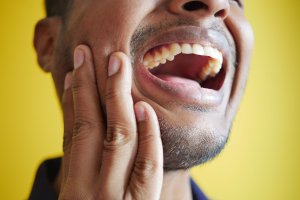
If your jaw clicks, aches, or feels locked up, you’re not alone. TMJ issues are showing up more and more in our south Edmonton clinic.
The reasons make sense. Stress is high. People are clenching and grinding more. Phones and laptops are pulling our heads forward. All of it adds up in the jaw.
Here’s an evidence-informed look at what TMJ is, why it happens, and where chiropractic care fits in.
What TMJ Actually Means
“TMJ” stands for temporomandibular joint. That’s the joint that connects your lower jaw to your skull. You have one on each side, just in front of your ears.
When people say they “have TMJ,” they usually mean they have pain or dysfunction in that joint. The more accurate term for this is TMD (temporomandibular disorder). But TMJ is the term most people google, so it’s what we’ll use here.
Common Symptoms
TMJ issues can show up in lots of ways:
- Jaw pain or tenderness
- Clicking, popping, or grinding sounds when you open or close your mouth
- A feeling that your jaw is locked or stuck
- Pain when chewing, especially tougher foods
- Ear pain or fullness (without an ear infection)
- Headaches, especially around the temples
- Neck and shoulder tension that won’t go away
- Pain that wakes you up in the morning
If you’ve checked off a few of these, your jaw is probably part of the picture.
What Causes TMJ Pain?
TMJ pain often has more than one cause. Common factors include:
- Clenching or grinding. Many of us clench during the day or grind at night without knowing it.
- Stress. Stress lives in the jaw for a lot of people. The masseter (your main chewing muscle) is one of the strongest muscles in the body for its size.
- Forward head posture. Your jaw position depends on your head position. When your head sits forward (hello, phone and laptop life), your jaw mechanics change. This is why we assess your head position in our office.
- Past dental work or injuries. Long dental appointments, jaw injuries, or whiplash can affect the joint.
- Tight neck and upper back muscles. The muscles of your jaw and your upper neck are deeply connected.
The Jaw-Neck-Posture Connection
Here’s where chiropractic care comes in. Your jaw doesn’t work alone. It’s deeply connected to your upper neck, your skull, and your posture. The same nerves that supply your jaw also supply part of your upper neck. The same muscles that move your jaw work alongside the muscles that hold up your head.
When your posture is compensated, your jaw mechanics often follow. When your upper neck is tight, your jaw often is too.
This is why people with TMJ pain often have:
- Tight upper back and neck muscles
- Forward head posture
- A history of tension headaches
- Tight shoulders
Adjusting the jaw without looking at the neck and posture often misses half the picture.
What the Research Shows
A growing body of research has looked at manual therapy (including spinal adjustments, soft tissue work, and joint mobilization) for TMJ disorders.
A 2015 systematic review published in the Journal of Oral Rehabilitation looked at randomized trials of manual therapy for TMJ. The review found that manual therapy can help with pain and jaw range of motion in people with TMJ disorders (Calixtre et al., 2015).
A 2009 study showed that addressing the cervical (neck) spine in TMJ patients led to reduced pain and improved pain sensitivity in the jaw (La Touche et al., 2009).
How Chiropractic Care Supports TMJ
A good chiropractic approach to TMJ looks at the bigger picture. At our south Edmonton clinic, we typically include:
- Assessment of the jaw, upper neck, and posture. All three are part of the system.
- Gentle adjustments to upper neck and upper back joints when they’re stiff and contributing to the issue.
- Soft tissue work for the tight muscles around the jaw and neck.
- Posture education to address the habits feeding the problem.
- Referral when needed. Sometimes you also need a dentist, a physiotherapist with jaw training, or a TMJ specialist. We work with the right team.
Simple Things You Can Try
While care plans should be personalized, here are some general habits that often help with TMJ pain:
- Notice your jaw position. Are your teeth touching? They shouldn’t be unless you’re chewing. Lips together, teeth apart is the resting position.
- Watch screen posture. Bring your phone and laptop up to your eyes. Don’t drop your head down.
- Soften your chewing. Skip the chewing gum and tough beef jerky for a while.
- Manage stress. Easier said than done. Slow breathing, time outside (the River Valley, Mill Creek Ravine, and Whitemud Creek trails are excellent for this), and consistent sleep all help.
- Use heat. A warm compress on the jaw and upper neck can ease tension.
TMJ Care in South Edmonton
At Southside Chiropractic, we work with south Edmonton patients dealing with TMJ pain often. Our care is evidence-informed and takes the whole jaw-neck-posture system into account.
If you’ve been struggling with jaw pain, clicking, or tightness, book a consultation. We’ll do a thorough check, give you clear answers, and help you understand what’s driving your symptoms.
Book your appointment at Southside Chiropractic in Edmonton →
References
- Calixtre, L. B., Moreira, R. F. C., Franchini, G. H., Alburquerque-Sendín, F., & Oliveira, A. B. (2015). Manual therapy for the management of pain and limited range of motion in subjects with signs and symptoms of temporomandibular disorder: A systematic review of randomised controlled trials. Journal of Oral Rehabilitation, 42(11), 847-861.
- La Touche, R., Fernández-de-las-Peñas, C., Fernández-Carnero, J., Escalante, K., Angulo-Díaz-Parreño, S., Paris-Alemany, A., & Cleland, J. A. (2009). The effects of manual therapy and exercise directed at the cervical spine on pain and pressure pain sensitivity in patients with myofascial temporomandibular disorders. Journal of Oral Rehabilitation, 36(9), 644-652.